Georgia, bestowed with a variety of climate zones and diverse habitats, plays host to numerous spider species. From the enchantingly beautiful to the fear-inducing, the Peach State’s arachnid inhabitants are as diverse as its geography. The heterogeneous environments, including mountains, coasts, and forests, provide a multitude of niches for an impressive array of spider species.
Among the spiders that call Georgia home, some well-known players stand out:
-Black Widow Spider: Infamous for its deadly venom, the Black Widow Spider, characterized by a distinct red hourglass shape on its abdomen, is one of the most recognized spiders in Georgia.
-Brown Recluse: Often identified by the violin-shaped mark on its back, the often-misunderstood Brown Recluse prefers undisturbed areas such as basements and sheds.
-Golden Silk Orb-Weaver: Known for spinning gold-colored webs, these large spiders are commonly found in Georgia’s warm climates.
✪ Pro tip: To safely identify spiders, always observe from a distance using tools such as binoculars or a camera.
Natural Habitats and Behaviors of Georgia’s Spiders
Georgia’s varied landscapes cater to different spider preferences. Some are found in water bodies and damp marshlands, whereas others prefer the dryness of sandhills and urban areas. Spiders such as the Brown Recluse favor the solace of human settlements, while others like the Golden Silk Orb-Weaver are ubiquitous, prominently showcasing their gold-tinted webs in Georgia’s forests and fields.
Common habitats of Georgia’s spiders:
- Forests and Fields
- Water Bodies
- Human settlements
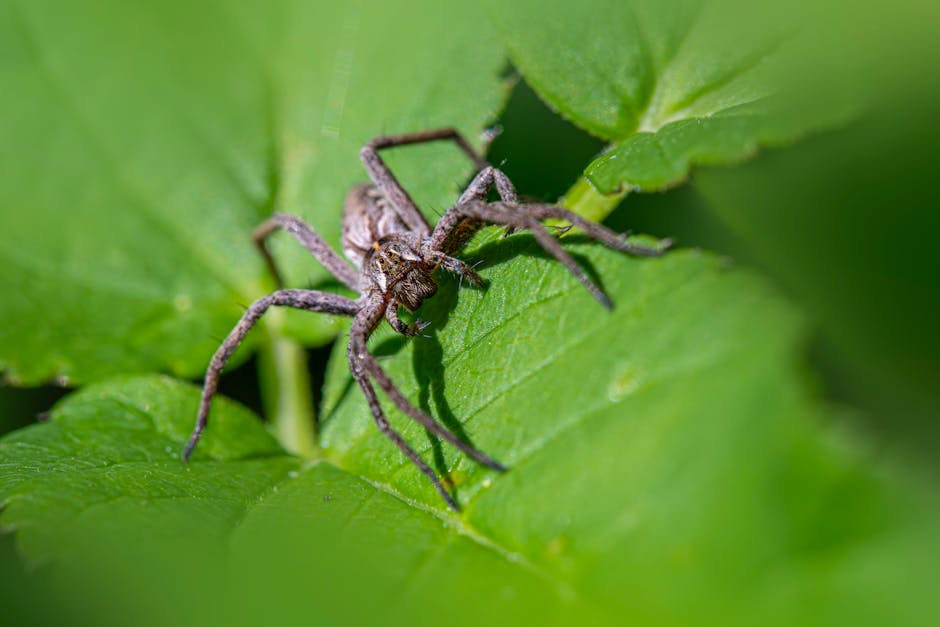
In terms of behavior, spiders can broadly be classified into two types: those that weave webs and passive hunters who stalk their prey. Compare the Golden Silk Orb-Weaver that skillfully weaves intricate webs to trap insects, to the Wolf Spider who relies on quickness and camouflage to ambush prey.
Importance of Spider Species in Georgia’s Ecosystem
Often overlooked or feared, spiders are vital sentinels of our ecosystems. They play a pivotal role in regulating insect populations, acting as a natural pest control. Furthemore, spiders contribute to enhancing soil nutrient cycles by consuming a considerable amount of insects.
How to foster spiders whilst maintaining safety:
- Plant native species in your garden to attract insects, which in turn will attract spiders.
- Limit artificial lighting at night to avoid attracting insects that might adversely impact the local spider population.
- Be educated about the spiders in your area to avoid unnecessary harm.
Despite several misconceptions, spiders pose minimal threats to humans. Most are non-aggressive and will only bite when threatened. On the flip side, they offer significant ecological benefits. Understanding their crucial role can help us coexist better with these fascinating creatures.
Conservation Status and Threats Facing Spider Species in Georgia
Spider species in Georgia, like many organisms worldwide, are feeling the effects of human-induced changes in their environments. While the majority of the spider species in the state are not currently classified as threatened or endangered, continuing habitat degradation could alter this status quo.
Threats to Spider Populations:
- Habitat loss due to urbanization and deforestation.
- Climate change can alter the distribution and abundance of prey and pose thermal stress.
- The use of pesticides can reduce both the spiders and their prey.
✪ Pro tip: As individuals, we can contribute to spider conservation in numerous ways. You can minimize pesticide use in your gardens, promote native plant species, and create spider-friendly spaces in your yards with plenty of hiding places.
Interesting Facts about Georgia’s Spider Species
Despite being often misunderstood, spiders offer a world of fascination with their unique behaviors and fascinating adaptations. To spark off your exploration of Georgia’s spider species, here are a few captivating specifics.
- Southern House Spider: Known in local vernacular as dirt daubers, these spiders are typically mistaken for a type of insect. Males and females vary so drastically in appearance that they are often presumed to be entirely different species.
- Green Lynx Spider: A fierce protector of her eggs, this brightly colored spider is known for spraying venom defensively if threatened. Despite its aggression, its venom is virtually harmless to humans.
- Joro Spider: A recent immigrant from East Asia, this large, colorful spider has taken up residence in Georgia. Despite its dramatic appearance, it is generally harmless to humans.
Safe Spider-watching:
- Do not touch or disturb the spider.
- Observe from a safe distance.
- Never attempt to handle venomous species.
- Use binoculars or zoom lens to get a closer look.
Embracing spiders’ presence can open up an intriguing world of biodiversity right under our noses. These fascinating eight-legged wonders are an essential part of our ecosystem deserving of our respect and protection.
Key Takeaway:
- Georgia is home to a rich diversity of spider species due to its varied landscapes, which provide different habitats for these creatures.
- Some of the commonly found spider species in Georgia include the Black Widow Spider, Brown Recluse, and Golden Silk Orb-Weaver.
- Spiders play a vital role in maintaining Georgia’s ecological balance by regulating insect populations and improving soil nutrient cycles.
- Although most spider species in Georgia are currently not threatened or endangered, the ongoing habitat degradation and climate change pose serious threats to their survival.
- Unveiling commonly misunderstood facts about spiders, and adopting safe and respectful observational practices can foster a better relationship between humans and these creatures while contributing to their conservation.
Spiders, irrespective of the fear they instill in many, are a fascinating part of our world and play an indispensable role in maintaining biodiversity. Embrace the presence of these eight-legged wonders, make efforts to learn about their intriguing characteristics, and contribute to their conservation. Let’s acknowledge their significance in our ecosystems and strive to coexist in harmony.
FAQs
Q: What types of spiders can I commonly find in my garden in Georgia?
A: Spiders you may commonly find in gardens in Georgia include the Black Widow Spider, Brown Recluse, and the Golden Silk Orb-Weaver, among others.
Q: What can I do to foster spiders in my garden safely?
A: Promoting native plant species in your garden can attract insects, which in turn attracts spiders. Limiting artificial lighting at night and avoiding excessive use of pesticides can also help foster a spider-friendly environment.
Q: How can I identify different spider species in Georgia?
A: Notable physical characteristics, web types, and behaviors can help in identifying different spider species. For safety, always observe from a distance using tools like binoculars or a camera.
Q: Do all spiders in Georgia weave webs?
A: No, not all spiders weave webs. While some species, like the Golden Silk Orb-Weaver, weave intricate webs to trap insects, others like the Wolf Spider rely on their speed and camouflage to ambush prey.
Q: What can I do to contribute to spider conservation?
A: You can contribute to spider conservation by reducing pesticide use in your surroundings, promoting native plant species, and creating spider-friendly spaces in your yards that provide ample hiding places.
Appreciate this article? Be sure to share it with your friends and continue exploring our posts for more informative articles.