Surveying Florida’s rich panoply of fauna, you’ll be enchanted by one creature that blends into the landscape yet evokes a certain uniqueness, defying and defining the versatile spirit of the state: The Northern Mockingbird. With its melodic songs and facile adaptability, this esteemed avian resident has left an unmistakable mark on the psyche and cultures of the Sunshine State.
About the Northern Mockingbird: General Overview
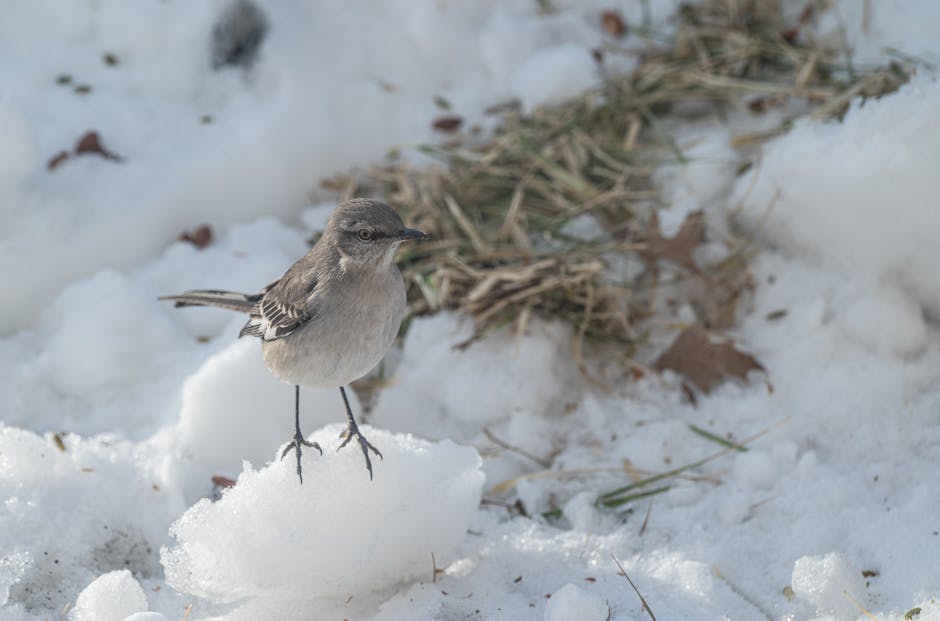
The Northern Mockingbird, known scientifically as Mimus polyglottos, possesses a charm that transcends common representation. Widespread across North America, it has notably made its home in the diverse landscapes of Florida. Small in size compared to some other birds, these creatures measure between 8-11 inches in length.
Cloaked primarily in shades of grey with white underparts, the Northern Mockingbird boasts a pair of striking wing patches that flash white under flight. The bird stands out not just for its physical attributes but also for its behavior. Notorious for defending its territory with ferocity, it’s also renowned for its ability to mimic sounds from its environment, including other birds’ songs.
Key facts about the Northern Mockingbird:
- Scientific name: Mimus polyglottos
- Length: 8-11 inches
- Weight: 45-60 grams
- Lifespan: Up to 20 years
- Diet: Omnivorous
- Populations: Widespread across North America, Caribbean and Mexico
The Northern Mockingbird’s Habitat and Distribution in Florida
Finding a Northern Mockingbird in Florida isn’t a trifling task. The bird is ubiquitous across the varied Floridian landscapes, from broadleaf forests to beachfront shrubs, showcasing an impressive range of adaptability. Whether along the glistening coastline or nestled within suburban communities, the Northern Mockingbird flourishes in diverse habitats.
Florida’s balmy weather complements the Northern Mockingbird’s biological requirements, promoting year-round residence with seemingly little migration. From soggy marshes to heated sand dunes, the bird’s flexibility is a testament to its astute survival instincts.
A map illustrating Northern Mockingbird distribution across Florida, oil paint strokes highlighting areas with notable concentrations.
Pro tip: Visiting Miami or Key West? Keep an eye out for Northern Mockingbirds guarding territories in local parks or performing aerial stunts during mating season – a memorable sight!
The Northern Mockingbird’s Diet and Predation
From juicy berries to crunchy insects, the Northern Mockingbird’s diet is as varied as its sounds. Their feeding habits reflect an opportunistic approach, varying their diet according to season and availability. This adaptability facilitates survival across different environments and seasons, contributing to their wide distribution.
Notwithstanding their tenacious territorial defense, Northern Mockingbirds do face threats from predators, particularly birds of prey and domestic cats.
The Northern Mockingbird’s common food items:
- Fruits: mulberries, blackberries, figs
- Insects: beetles, ants, spiders
- Occasionally small lizards and discarded human food
Best Practices for birdwatchers:
- Avoid feeding Northern Mockingbirds bread; provides little nutritional value.
- Leave out cut fruits and vegetables to attract these melodious creatures.
- Don’t intervene if a Northern Mockingbird is foraging; they’re particularly skilled at finding food.
Up next: diving into the mating habits, lifespan, human interaction and cultural representation of the Northern Mockingbird.
The Northern Mockingbird’s Mating Habits and Lifespan
The Northern Mockingbird’s mating habits are as charismatic as its melodic repertoire. Male mockingbirds engage in aerial displays and harmonic mimicry to impress females, sometimes even fluffing up their feathers to appear larger. Once mating occurs, both the male and female engage in nest-building, a mixture of twigs, grass, bark, and leaves.
The male Northern Mockingbird typically takes the role of the primary defender, vigorously safeguarding the nest from any intrusions. Females, on the other hand, primarily assume responsibility for incubation and rearing the offspring. The chicks fledge within 12 to 13 days post-hatching, signifying the rapid transition into self-sufficiency.
On lifespan, Northern Mockingbirds have a commendable record. In the wild, they may live for about 8 years, with the oldest known individual reaching the ripe age of 20. With responsible human intervention, it is plausible that this lifespan may be extended.
Threats to the Northern Mockingbird populations include habitat loss, climate change, and predation, particularly by pet cats. On the brighter side, numerous bird conservation groups actively work toward preserving this species and maintaining its habitat.
Stages in the lifecycle of a Northern Mockingbird:
- Egg
- Nestling
- Fledgling
- Juvenile
- Adult
The Northern Mockingbird vs Red-winged Blackbird Mating Habits:
| Northern Mockingbird | Red-winged Blackbird | |
|---|---|---|
| Mating Display | Aerial stunts, mimicry | Vocal calls, showing red shoulder patches |
| Nesting | Both sexes engage in nest-building | Females primarily build nests |
| Parenting | Shared responsibilities between both sexes | Females primarily incubate and care for young |
Human Interaction and the Northern Mockingbird in Culture
Human encounters with the Northern Mockingbird are common across Florida. Demonstrating a natural audacity, these birds often live close to human residences, parks, or gardens, sometimes even fiercely defending their territories against human intruders. However, as with any wildlife, it’s essential to observe them respectfully at a distance.
Considering pet ownership? While it’s legally prohibited to own Northern Mockingbirds as pets in many states, it’s also impractical due to their territorial nature and varied diet.
The Northern Mockingbird holds a special cultural significance in Florida. Thanks to its expansive song range and fearlessness, it was designated as Florida’s state bird in 1927. The bird’s emblematic status extends into the elements of popular culture, inspiring authors, musicians, and artists.
Pros and Cons of keeping a Northern Mockingbird as a pet:
- Pros: Known for their rich, melodic songs that can add charm to any household.
- Cons: Highly territorial behavior, requires a varied diet, and faces legal restrictions in many states.
Notable instances of Northern Mockingbirds in culture:
- Harper Lee’s renowned novel To Kill A Mockingbird
- The poem Listen to the Mockingbird by Septimus Winner
- Many folk and blues songs, harnessing the bird’s romantic appeal and intrinsic symbolism.
Exploring Florida wouldn’t be complete without acknowledging the Northern Mockingbird’s role, not just as a delightful avian spectacle, but as a potent cultural symbol. So, next time you’re in Florida, take a moment to appreciate these melodic virtuosos of the bird kingdom.
Key Takeaway:
- The Northern Mockingbird is a notable resident of Florida’s varied environments due to its physical traits – primarily grey with white underparts – and its ability to mimic sounds from its environment.
- Its adaptability has enabled the bird to thrive in diverse habitats across the state, including landscapes from broadleaf forests to beachfront shrubs.
- An omnivore by nature, the bird’s diet aligns with the availability of food across seasons, and it defends itself tenaciously from predators.
- The Mockingbird’s mating rituals are characterized by male aerial stunts and harmonic mimicry, and both male and female participate in nest building.
- The Northern Mockingbird has cultural significance in Florida and features prominently in arts, literature, and folklore.
It is a heartening thought that the charming Northern Mockingbird continues to grace Florida with its adaptable charm and unique vocal skills, symbolizing the state’s versatile spirit. If you feed your curiosity by delving deeper into the life and habits of this intriguing creature, you will be rewarded with insights into the extraordinary adaptability of nature itself.
FAQs
Q: Can I keep a Northern Mockingbird as a pet?
A: While Northern Mockingbird’s melodic songs might be enticing, they are not recommended as pets due to their territorial nature, diverse diet, and legal restrictions in many states.
Q: What are some of the natural predators of the Northern Mockingbird?
A: Predators to Northern Mockingbirds include birds of prey and domestic cats.
Q: How can I spot a Northern Mockingbird in Florida?
A: Northern Mockingbirds can be found across various landscapes in Florida, including forests, suburban communities, and beachfront shrubs.
Q: Why is the Northern Mockingbird the state bird of Florida?
A: The Northern Mockingbird was chosen as Florida’s state bird in 1927 due to its expansive song range and daring behavior.
Q: How does the Northern Mockingbird fit into human arts and culture?
A: The Northern Mockingbird has inspired artists, musicians, and authors, featuring prominently in books like To Kill A Mockingbird, poems, and folk songs.
We hope this article shed some light on the fascinating Northern Mockingbird. Feel free to share the article and continue exploring our website for more intriguing insights.