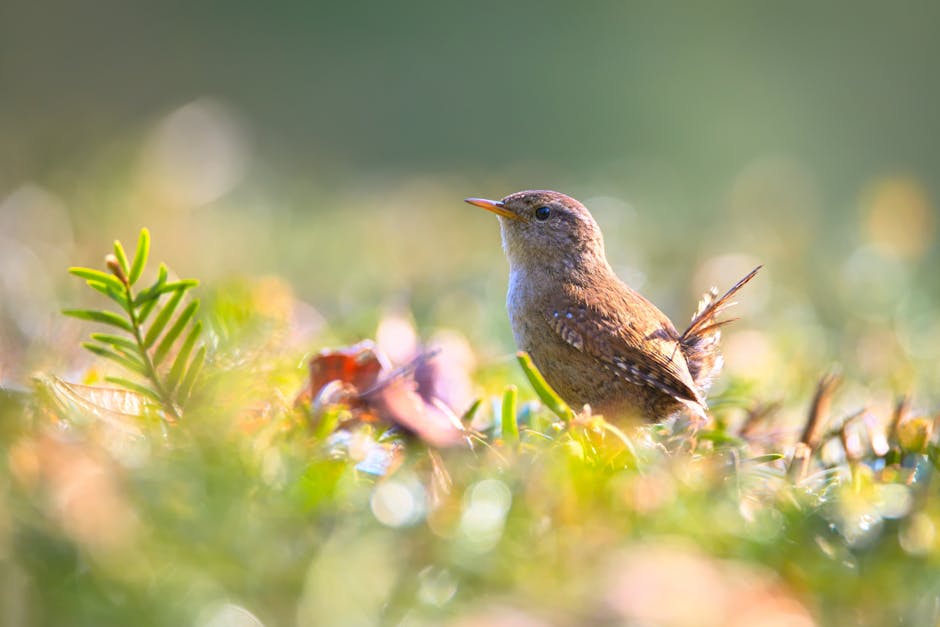
To effectively identify the Carolina Wren, you must first understand its key characteristics. These birds, with their round bodies and long tails that often cock upwards, are well-known for their distinctive physical appearance. They typically measure an average of 4-5.5 inches in length and weigh anywhere between 0.6-0.8 ounces, roughly equal to that of a lemon.
Distinctively, their plumage showcases an array of warm, chestnut-brown feathers which brilliantly contrast against a lighter belly. Most notably, the Carolina Wren sports a bold, white eyebrow stripe that accentuates its dark eyes and bill. Let’s bullet down some of the major identifiable features for your convenience:
- Overall brown palette with undersides of light hue.
- The tails are long and often cocked up.
- Noticeable white stripe above each eye.
- Dark bill with a slender and slightly decurved shape.
Pro Tip: When seeking to identify Carolina Wrens in the wild, pay particular attention to their eyestripe and tail. Their unique song, a series of rapid, teakettle-like notes, can also be a helpful identification tool.
The Carolina Wren’s Habitat and Distribution in South Carolina
In South Carolina, the Carolina Wren is likely to be found occupying a variety of semi-open habitats. This includes everything from forests and woodlands to your homely backyard gardens, demonstrating their adaptability towards different environments.
They demonstrate a proclivity towards areas packed with undergrowth and brush piles, where they scurry about, often keeping low to the ground while foraging for food. It’s important to note that these birds can be seasonal movers, but they do not migrate in the typical sense. They are a true representative of the state’s natural beauty, being easily identifiable across South Carolina’s regions.
If you’re on the hunt for Carolina Wrens, here are a few signs to look out for:
- Nest-like structures in low, hidden areas such as in piles of brush or in hanging planters.
- A loud and precise song, which is often a series of rapid teakettle notes.
- Occurrence of bird in regions filled with trees and shrubberies.
Best Practices: It’s always crucial to respect the natural habitats of any wildlife, including that of the Carolina Wren. Refrain from disturbing their nests, and keep a respectful distance when bird-watching to avoid causing them any unnecessary stress.
Stay tuned for the next section where we’ll delve into the behavior and lifestyle of this fascinating bird, shedding light on its behavior, feeding habits, and so much more. As we deepen our understanding of this unique bird, we will come to appreciate why it was deemed the ideal emblem of South Carolina’s rich natural heritage.
Behavior and Lifestyle of The Carolina Wren
Carolina Wrens lead quite active and vibrant lives, often revealing their presence through their consistent, loud singing. Interestingly, their diet primarily consists of insects and spiders, coupled with occasional fruit and seed intake. When it comes to hunting, these birds display an astonishing versatility by searching both on the ground and high in trees, poking into any crack or crevice that catches their sight.
Unlike many birds, Carolina Wrens do not form large families or groups, instead preferring to stick to their mate in the little territory they call home. Usually, they avoid harsh winters by staying in their natural habitat instead of migrating. Let’s examine the behavior of the Carolina Wren versus a related species, the House Wren.
| Behavior | Carolina Wren | House Wren |
|---|---|---|
| Song | Constant, loud singing | Spontaneous, intermittent singing |
| Food | Insects, spiders, seeds and fruits | Primarily insects and spiders |
| Habitat | Various habitats including forests and backyard gardens | Primarily woodland edges, thickets and shrubs |
| Migration | Residential | Migratory |
Mating Habits and Reproduction of The Carolina Wren
Carolina Wrens are monogamous birds that form lasting pairs, with males performing an elaborate courtship dance to woo potential mates. Once bonded, partners stay within sight of each other, ensuring their territorial claims.
Their nesting habits are impeccable, often choosing hidden, sheltered spaces such as in tree hollows, under roofs or even in old boots, to build their nests. The female lays an average of 4 to 6 speckled, whitish eggs, which she ferociously guards while the male supplies her with food.
Best Practices: It’s vital to avoid interfering with nests during the spring and summer breeding seasons, even if they’re located in human-made structures. Instead, consider it a privilege to have a front-row seat to this natural marvel.
Pro Tip: If you’re keen to encourage Carolina Wrens to nest in your garden, planting native shrubs and providing birdhouses or nest boxes can prove to be inviting.
Significance of The Carolina Wren as South Carolina’s State Bird
The Carolina Wren holds an esteemed place in South Carolina’s cultural and natural landscape, with its designation as the state bird adding to its reputation. Its constant presence all year round and loud, distinctive song resonates with South Carolinians, reflecting their resolute spirit.
Amusingly, the Carolina Wren ousted the Northern Mockingbird to claim the title of the state bird by an Act of the General Assembly of South Carolina, underlining its crucial role in the state’s wildlife. Many residents believe that the energy and industrious nature of the Carolina Wren make it an ideal symbol for their state.
In stark comparison, few other states have a wren as their state bird, further elevating the prominence of the Carolina Wren in South Carolina. Be it art, literature or celebrations, the presence of the Carolina Wren in South Carolina’s culture is significant. An example would be the Annual Carolina Bird Club meetings, where bird enthusiasts gather to discuss various bird species, notably the Carolina Wren.
Remember, as you move around South Carolina, keep an ear out for the lively ‘teakettle, teakettle’ call of the Carolina Wren – a remarkable bird that is a unique symbol of this enchanting state.
Key Takeaway:
- The Carolina Wren, South Carolina’s state bird, is well-known for its distinctive physical appearance marked by a warm, chestnut-brown plumage, a high tail, and a bold, white eyebrow stripe. Its unique song also helps in its identification.
- Its adaptability lets it thrive in a variety of semi-open habitats across the state, from forests to backyard gardens.
- Its hearty song, active lifestyle, and non-migratory nature resonate with the resilience and spirit of South Carolinians, making it a significant symbol of the state.
By understanding the behaviors and lifestyle of the Carolina Wren, we can better appreciate its critical role in South Carolina’s natural environment and cultural significance. With respect and care for their habitats, we can ensure this beautiful bird continues to enhance the state’s rich bio-diversity.
FAQs
Q: What do I do if I find a Carolina Wren’s nest in my backyard?
A: If you find a Carolina Wren’s nest in your backyard, consider it a special privilege. Keep a respectful distance to avoid disturbing them, especially during the breeding season.
Q: Do Carolina Wrens migrate out of South Carolina?
A: Unlike many other species, Carolina Wrens are a residential bird and do not migrate in the traditional sense. They remain in their habitat even during harsh winters.
Q: Are Carolina Wrens considered endangered or at risk?
A: As of now, the Carolina Wrens are not classified as endangered or at risk. However, preserving their habitat and treating them respectfully remains important.
Q: Why do Carolina Wrens often keep their tail cocked up?
A: The reason for Carolina Wrens often keeping their tail cocked up is not entirely known but it’s a distinguishing feature of these birds and can help in identification.
Q: How can I encourage a Carolina Wren to nest in my yard?
A: Planting native shrubs and providing birdhouses or nest boxes can make your yard inviting for Carolina Wrens.
Please remember to share this article with other bird enthusiasts and explore more posts on our website. Appreciate the vibrant Carolina Wren and let its presence enhance your South Carolina experience.