When you wander through the forest and hear a deep, resonating drumming sound, there’s a good chance the performer is a Pileated Woodpecker, likely the female of the species given her tireless devotion to her tasks. This bird species, the largest woodpecker found in the U.S and Canada, is truly nature’s queen and a sight to behold.
Distinctive Features and Characteristics of the Female Pileated Woodpecker
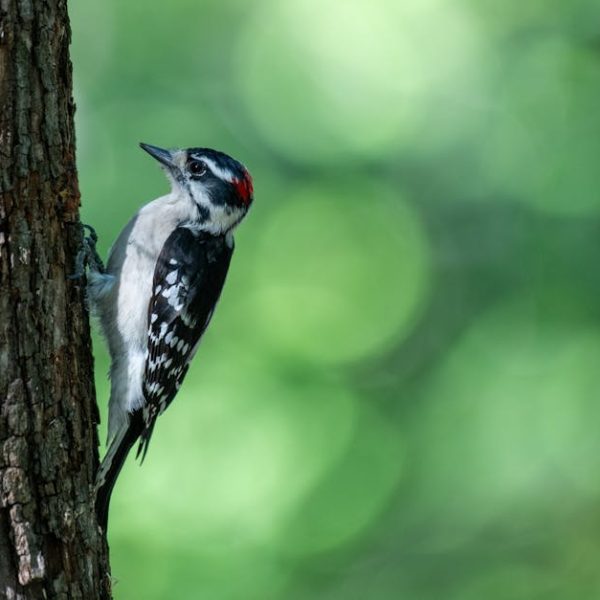
The magnificence of the female Pileated Woodpecker is deeply entrenched in her stunning physical attributes. She parades a striking black and white striped plumage with flashes of white underwing while in flight. Sitting atop her 16-19inch frame is a radiant red crest. Underscoring her beauty is a soft grey underbelly that sets her apart from the male who sports a red moustache stripe instead.
Additional distinctive features of the queen of the forest includes:
- Size: Ranging from 16 to 19 inches in length, she’s nearly crow sized.
- Weight: She carries an approximate weight of 250 to 350 grams.
- Beak: A sturdy and chisel-like beak designed for drilling.
- Wings: Possess a broad wingspan of about 26 to 30 inches.
Just as her beauty mesmerizes, so do the various ways she makes use of these exquisite features to her advantage. Interestingly, her black and white striped pattern provides excellent camouflage against tree barks, lending her an edge over predators. Conversely, her large size, while majestic, might make her a more visible target for predatorial animals.
Unique Behaviour and Habits of the Female Pileated Woodpecker
Beyond the aesthetic beauty that the female Pileated Woodpecker brings to the forest, she offers a stunning display of unique behaviors and habits. Her primary movement is an undulating flight, a series of swoops mixed with intermittent wing-flapping. She’s most recognized by her foraging patterns, excavating deep into dead trees and fallen logs in search of ants and beetle larvae.
Did you know, the female Pileated Woodpecker’s trademark drumming sound is not only a way of communicating with potential partners but also a means of asserting territory? Furthermore, observing the frequency of her drumming can hint at her health conditions and external threats in her habitat.
The Role of Female Pileated Woodpecker in Reproduction
Reproduction in the Pileated Woodpecker species sees the female take on significant responsibilities. Courtship begins with drumming followed by a series of gestures and calls. Once paired, both partners work to build a nest, often in the cavity of a dead tree. However, it’s the female who lays 3 to 5 eggs at once.
The life cycle of the Pileated Woodpecker starts with courtship, progressing to nest building, egg laying and finally the fledging of the young. This complete cycle plays an important role in maintaining the balance of the species. Differently, male Pileated Woodpeckers secure the nest’s vicinity, a significant role in their propagation. However, it’s the female Pileated Woodpecker who bears the greater burden in ensuring the species’ continuity.
Adaptation and Survival Strategies of the Female Pileated Woodpecker
Known for her resilience, the female Pileated Woodpecker employs ingenious survival strategies. She stays devoted to her diet of insects, fruits, and nuts, which keep her vibrant and healthy. Moreover, the woodpecker uses her powerful beak and feet to evade predators by scaling up tall trees swiftly. This bird has also remarkably adapted to different climates and habitats, from deciduous forests to park-like residential areas.
However, survival threats to the Female Pileated Woodpecker persist, including:
- Habitat loss: Urban development and deforestation limit their living and breeding spaces.
- Predators: Large birds of prey, snakes, and mammals can prey on Woodpeckers and their eggs.
- Human intervention: Pollution, pesticides, and disturbances interfere with their daily life.
- Climate change: Changes in global climate impact their food availability and habitat conditions.
Responsible human intervention, such as preserving natural habitat, refraining from pesticide use, and creating bird-friendly environments, can help secure the future of these majestic creatures.
Contribution of the Female Pileated Woodpecker to Ecosystem Health
The female Pileated Woodpecker contributes substantially to the health of the forest ecosystems. By carving out large cavities in dead trees while foraging for insects, she creates homes for various species like squirrels, owls, bats, etc., that can’t make their own. Additionally, her preference for feeding on insects, notably wood-boring beetles, ants, and other invertebrates, helps control their populations.
Support the Female Pileated Woodpecker and the health of our ecosystems by:
- Maintaining old and dead trees in your surroundings, as these serve as their primary nest and foraging sites.
- Providing bird feeders with fruits, nuts, and suet as supplements, especially during winter months.
- Advocating against irresponsible deforestation and urban development practices.
Indeed, the female Pileated Woodpecker is rightfully Nature’s Queen. Her distinctive features and behaviours, role in reproduction, survival strategies, and contributions to ecosystem health make her an indispensable part of our natural world.
Key Takeaway:
- The Female Pileated Woodpecker has distinctive physical attributes like black and white striped wings, red crown, grey underbelly, sturdy beak, and significant size and weight.
- Her behaviors, including specific foraging and flying patterns, drumming sound for communication and territory assertion, are unique.
- The female bird plays a crucial role in the reproduction process, right from the courtship stage, building the nest, and nurturing the young ones.
- The bird’s survival strategies include specialized feeding habits, predator evasion techniques, and adaptation to varying climates and habitats.
- The bird contributes to maintaining a balanced ecosystem through actions like seed dispersal and insect control.
Let’s all appreciate Nature’s Queen, the Female Pileated Woodpecker, for her significant roles. We are encouraged to take actions that support and protect her, thereby contributing to a balanced and healthy ecosystem.
FAQs
Q: Are Female Pileated Woodpeckers aggressive?
A: Pileated Woodpeckers are relatively peaceful birds, more focused on their tasks like foraging and taking care of young ones. However, they can be territorial and might act defensively if they perceive a threat to their territory.
Q: Can I attract Pileated Woodpeckers to my backyard?
A: Yes, you can attract Pileated Woodpeckers by having bird feeders with their favorite foods like fruits, nuts, and suet, or maintaining old and dead trees which they use for nesting and foraging.
Q: How can I tell the difference between a male and female Pileated Woodpecker?
A: The primary difference lies in their coloration. While both have a red crest, the male sports a red stripe, known as a moustache stripe, which is absent in females.
Q: How often do Pileated Woodpeckers reproduce each year?
A: Typically, Pileated Woodpeckers have one brood per year, which involves stages like courtship, nest building, egg-laying, and fledging.
Q: What are the main threats to Female Pileated Woodpeckers?
A: The main threats include habitat loss due to urban development and deforestation, predation, harmful human intervention like pollution and pesticide use, and climate change affecting food and habitat.
Remember to share this article with fellow bird enthusiasts and explore more of our posts for insights into the captivating world of birds.