Among North America’s most familiar and recognizable avian species, the Downy Woodpecker holds an undisputed position. Its ubiquity across various ecosystems and adaptability with changing environments make it a particularly interesting study of nature’s resilience and adaptability. In the ensuing discourse, we shall delve deeper into their physical characteristics, habitats, behavior, ecosystem roles, and conservation status.
Identifying Features of the Downy Woodpecker
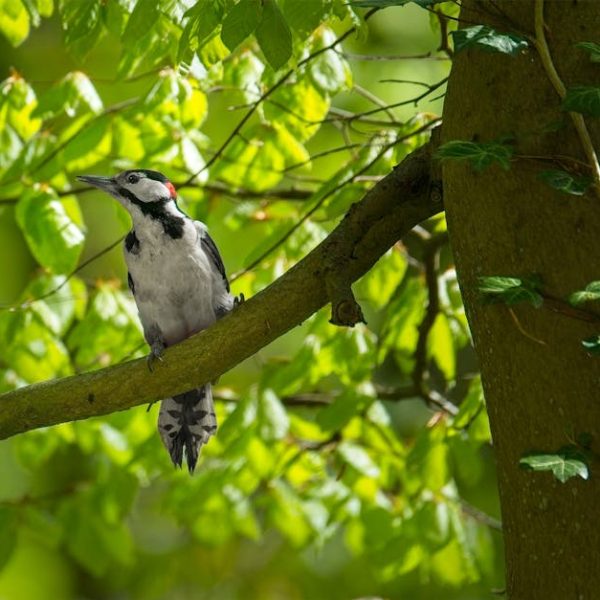
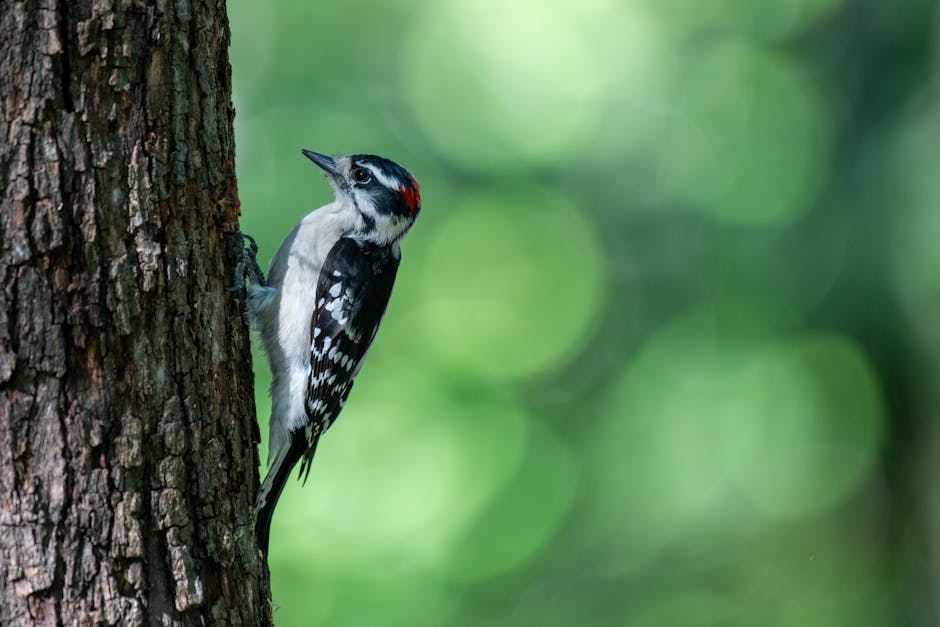
Depicting a classic avian silhouette with a brilliant contrast of black and white across their body, Downy Woodpeckers embody charm and allure. These small-sized woodpeckers, typically 5.5 to 6.7 inches in length, often catch one’s eyes with their striking black wings featuring white spots. Complementing their jet-black tail is a white underbelly and a distinctive black strip across the eyes. What stands out is their distinctive pointed beak, much shorter and sharper than their relatives, designed to peck into tree barks with high precision. However, essential identifying features can be compiled as follows:
- Size: 5.5 to 6.7 inches
- Wing color: Black with white spots
- Underbelly color: White
- Unique body mark: Black stripe across eyes
- Beak: Short and pointed
A quick comparison with other common types of woodpeckers in the table below should aid identification:
| Type of Woodpecker | Size | Primary Color | Beak |
|---|---|---|---|
| Downy Woodpecker | 5.5-6.7 inch | Black and white | Short and sharp |
Understanding the Downy Woodpecker’s Habitat
Downy Woodpeckers are true survivors, adapting to various habitats from dense forests to urban residential areas. They typically choose deciduous and mixed deciduous-coniferous woodlands, but are also known to inhabit fruit orchards and city parks. They are frequently found in alder and willows along streams, cottonwood groves, and among poplars on prairies, demonstrating their versatile habitats.
Please note some of the easy ways to spot a Downy Woodpecker in the wild:
- Listen for their distinctive drumming sound against tree trunks.
- Look for small holes in trees which can be an indication of their nesting or feeding activity.
- Pay attention to bird feeders in late winter, as Downy Woodpeckers are known to visit them.
Behavior and Habits of the Downy Woodpecker
Understanding a Downy Woodpecker extends beyond their physical attributes and habitat to their intriguing habits and behavior. They are known for their remarkable acrobatic skills, often moving upside down on branches while foraging. Their diet primarily consists of insects, seeds, and berries. Come mating season, they engage in spirited aerial displays and their nesting habits portray intimate monogamous pairings.
Here’s a brief checklist of their primary behavioral traits:
- Foraging upside down on tree branches and trunks.
- Consuming insects as their primary diet, but also seeds and berries.
- Aerial displays during mating season.
- Monogamous pairs during nesting period.
While bird watching, make sure to keep an eye out for these behaviors indicative of Downy Woodpeckers. In fact, engaging with these magnificent creatures while being mindful of their activities adds a whole new dimension to bird watching. If you’re lucky, you might even spot one of these wonderful birds indulging in an aerial acrobatic display or witness them meticulously pecking away at a tree trunk!
Role of the Downy Woodpecker in Ecosystem
The Downy Woodpecker, similar to its avian brethren, plays a crucial role in preserving ecological balance. As insectivores, they contribute to controlling insect populations, particularly beetles and ants, thus maintaining a delicate balance. Their role in seed dispersion is just as important, aiding in the proliferation of certain tree species. They are also known to act as a ‘clean-up crew,’ pecking away dead trees, which can help curb the spread of tree diseases.
Here is a brief enumeration of the Downy Woodpecker’s roles in the ecosystem:
- Controls insect population.
- Assists in seed dispersion.
- Pecks away at dead trees, potentially helping hinder the spread of diseases.
Let’s compare the roles of different types of woodpeckers, including the Downy, within their ecosystems:
| Type of Woodpecker | Insect Control | Seed Dispersion | Cleans Up Dead Trees |
|---|---|---|---|
| Downy Woodpecker | Yes | Yes | Yes |
Conservation Status of the Downy Woodpecker
Currently, the International Union for Conservation of Nature (IUCN) classifies the Downy Woodpecker as Least Concern, indicating a relatively stable population. However, local populations may vary, and they are not immune to environmental threats. Major threats include habitat loss due to deforestation and urbanization, and the impacts of climate change, such as changes in insect populations and alterations to their habitual ranges.
Key threats to Downy Woodpeckers include:
- Habitat loss from deforestation and urbanization.
- Climate change effects, including temperature rises and shifts in insect populations.
In the spirit of conservation and promoting the well-being of these remarkable birds, here are a few steps we can take:
- Support local and international organizations focused on forest conservation.
- Plant native trees and shrubs in yards and gardens to provide habitat and food sources.
- Keep bird feeders stocked, especially during late winters when food sources are scarce.
- Encouraging policies that reduce carbon emissions to mitigate the impacts of climate change.
In understanding and appreciating the Downy Woodpecker, we not only connect deeper with the natural world but also recognize the importance of each organism in maintaining the health of our planet’s ecosystems!
Key Takeaway:
- The Downy Woodpecker is a familiar species across North America and stands out due to its distinctive features such as black wings, white underbelly, a black stripe across the eyes, and a short, sharp beak.
- They are adaptable creatures, capable of residing in a range of habitats from dense forests, deciduous and mixed deciduous-coniferous woodlands to urban areas.
- As insectivores, they play an essential role in controlling insect population, seed dispersion, and in curbing the spread of tree diseases by pecking away at dead trees.
- Even though the conservation status of the Downy Woodpecker is currently listed as Least Concern by IUCN, there are ongoing threats to their population such as deforestation, urbanization, and climate change.
As we appreciate the beauty and uniqueness of the Downy Woodpecker, let’s also remember our responsibility towards these creatures. It’s in our collective interest to create and sustain an environment where they can thrive. We can each contribute in small ways, such as supporting forest conservation efforts, planting native trees, and campaigning for policies that mitigate climate change impacts.
FAQs
Q: What do Downy Woodpeckers primarily eat and how do they search for food?
A: Downy Woodpeckers primarily eat insects, but they also consume seeds and berries. When they are searching for food, they can often be found foraging upside down on tree branches and trunks.
Q: How can I distinguish a Downy Woodpecker from other types of woodpeckers?
A: Downy Woodpeckers have a set of distinctive features like black wings with white spots, a white underbelly, a black stripe across the eyes and a short, sharp beak. They are also smaller in size compared to many other woodpeckers.
Q: Do Downy Woodpeckers prefer a specific kind of habitat?
A: Downy Woodpeckers are versatile and can adapt to various habitats from dense forests and mixed deciduous-coniferous woodlands to urban residential areas. They are also commonly found in fruit orchards and city parks.
Q: Are Downy Woodpeckers currently endangered?
A: No, the Downy Woodpecker is currently classified as Least Concern by the International Union for Conservation of Nature (IUCN). However, they do face threats from habitat loss due to deforestation and urbanization, and also the impacts of climate change.
Q: What role do Downy Woodpeckers play in the ecosystem?
A: Downy Woodpeckers play a crucial role in the ecosystem by maintaining insect populations, assisting in seed dispersion, and helping hinder the spread of tree diseases by pecking away at dead trees.
Explore more articles on our website to satisfy your curiosity about the natural world. If you found this article illuminating, feel free to share it with your circles and ignite their interest in nature too!