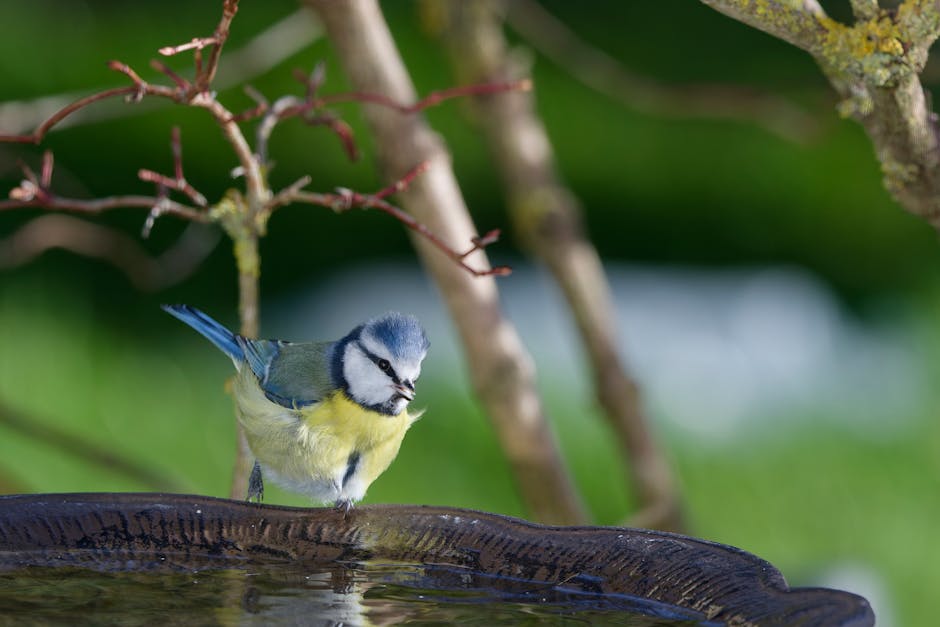
Birds make a delightful contribution to any garden. Not only do they add life and excitement with their vibrant colours and enchanting songs, but they also play a crucial role in our ecosystem. One easy way to attract avian visitors is providing a birdbath. However, to ensure birds of different species and sizes can enjoy it comfortably and safely, the birdbath depth should be optimal.
A Guide to the Ideal Birdbath Depth
The key to an ideal birdbath is a delicate balance: it should be deep enough for birds to bathe, but not so deep that smaller species risk drowning. Essentially, a depth of around 1.5 to 2 inches hits the perfect spot. This depth allows birds to safe stand in the water, immerse their wings, or splash around as they wish, while preventing any potential drowning incidents.
Pro Tip: Don’t worry if your birdbath is not initially the perfect depth – small adjustments can be made using flat stones or pebbles, creating areas that are both shallower and deeper to accommodate a range of species.
Understanding the Potential Risks of Inappropriate Birdbath Depth
Just like humans, birds have preferences and safety needs when it comes to bathing. An excessively shallow or overly deep birdbath can pose problems. Shallow water may not be enough for birds to clean their feathers properly, while deep water can be dangerous, particularly for smaller species that may struggle to touch the bottom and could drown.
Signs that your birdbath may be too deep include birds only standing on the edge, merely drinking, and never fully entering the water. Conversely, if your water consistently evaporates quickly, leaving the bath empty most of the time, it may be too shallow.
Best Practice: Observe bird behaviours when using your birdbath to determine if any adjustments may be necessary.
Factors Influencing Birdbath Depth
The required birdbath depth can be influenced by various factors. The types and sizes of local birds, geographical location (some regions have larger birds generally than others) and specific bird behaviours all play a role.
For instance, while sparrows and finches prefer shallower depths of around 1 inch, robins and jays, being larger, can often handle a little more depth, typically around 2 inches on the minimum side.
Moreover, adding ornamental elements can make a difference. Features like rocks or a stepped design can cater to different bird species, providing varying depths in the same birdbath and increasing its overall appeal.
Tactics to Adjust Birdbath Depth
Adjusting your birdbath’s depth isn’t a complex task, and there are several ways to go about it. For instance, you can add or remove flat stones, strategically place pebbles, or even consider altering the bath’s overall design. Some birding stores also offer birdbath inserts that can adjust the depth.
Regular cleaning and maintenance ensure the birdbath remains at the optimal level. Over time, filled water will evaporate or may get splashed out more in some areas, leading to uneven depth. Regular checks, refills, and small adjustments are necessary to keep your birdbath inviting to its feathered patrons.
Checklist:
- Observe bird behaviours
- Measure bath depth
- Add/remove stones as necessary
- Regularly refill water
- Clean the bath regularly to prevent buildup or blockages
Creating a Bird-Friendly Environs Alongside Optimal Birdbath Depth
While the optimal depth is a crucial aspect of a birdbath, it’s not the only factor that creates a welcoming environment for birds. Other elements like the location, cleanliness, and availability of food help to make your yard a favourite spot for your avian visitors.
For instance, placing the birdbath in a quiet, slightly shaded location can attract more birds – they feel safer when they have somewhere to hide from predators and the shade helps keep the water cool and fresh.
Pro Tip: Regularly clean your birdbath and keep it filled to ensure your feathered friends stay healthy and keep coming back. A clean, reliable source of water is even more essential during hot summers and cold winters. Pair this with a well-stocked bird feeder and you’ve got a certified bird haven on your hands.
Pros and Cons of Different Bird-Friendly Practices
Not all practices for birdbath maintenance create the same results. Some methods may be better for convenience while others prioritize bird safety or health.
| Methods | Pros | Cons |
|---|---|---|
| Using a birdbath heater in winter | Keeps the water from freezing, allowing birds to bathe and drink even in cold weather. | Electric heaters need a power source and can sometimes deter birds from approaching if they’re not used to it. |
| Adding a water agitator or mister | Creates movement, which attracts more birds. Can also prevent mosquito breeding. | Requires regular checkups and maintenance to keep running smoothly. |
| Placing food nearby | Attracts more birds and provides a convenient food source, encouraging longer visits. | Can also attract pests if not monitored properly. |
| Regular cleaning with mild soap and water | Helps prevent the spread of diseases and keeps your bath looking its best. | Requires investing time and effort on a regular basis. |
Creating your bird-friendly space is a project of love. While it can be a bit of work, the result is a living outdoor space filled with beautiful, singing creatures. So, whether you use a store-bought birdbath or make your own, remember the key tips for optimal birdbath depth, keep an eye on your feathery friends’ behavior, and adjust as needed. They will surely thank you for your efforts with their delightful presence. Happy birding!
Key Takeaway:
- The ideal birdbath depth is around 1.5 to 2 inches to ensure safety for smaller bird species and usability for all.
- Monitor the birds’ behavior and adjust the birdbath depth accordingly.
- Various factors, like bird species, geographical location, and bird behaviors, influence the appropriate birdbath depth.
- The birdbath depth can be adjusted by adding or removing stones, altering the design, and using inserts.
- Other bird-friendly practices like birdbath location, cleanliness, and food availability contribute to creating a welcoming environment for birds.
Take comfort knowing that your efforts to create an ideal environment for birds in your garden is worth every effort. As you enjoy watching them bathe and interact, remember the satisfaction comes from knowing you have provided a safe and enjoyable space for these delightful creatures. Continue to observe and adjust as necessary, ensuring every bird has an enjoyable experience in your birdbath.
FAQs
Q: Is it safe to put a heater in my birdbath during winter?
A: Yes, it’s safe and can be beneficial as it keeps the water from freezing, allowing birds to bathe and drink even in cold weather. Just ensure that it doesn’t scare away the birds and isn’t a potential fire hazard.
Q: How can I prevent mosquitoes from breeding in my birdbath?
A: One way to prevent mosquitoes from breeding in your birdbath is by adding an agitator or mister. The movement they create in water prevents mosquitoes from laying eggs.
Q: How often should I clean my birdbath?
A: Regular cleaning with mild soap and water helps prevent the spread of diseases and keeps your bath looking its best. It’s best to do this maintenance as often as possible, perhaps once a week or more.
Q: Can I use a birdbath insert to adjust the depth of my birdbath?
A: Yes, birdbath inserts are available in many birding stores, and can be a convenient way to adjust the depth of your birdbath.
Q: Is it okay to place food near my birdbath?
A: While placing food near your birdbath can attract more birds and encourage longer visits, it can also attract pests if not properly monitored. It’s best to watch carefully to ensure it remains a benefit not a disturbance.
Share this article with fellow birding enthusiasts, and explore more posts on our website to continue expanding your knowledge on creating the perfect garden for your feathered friends.