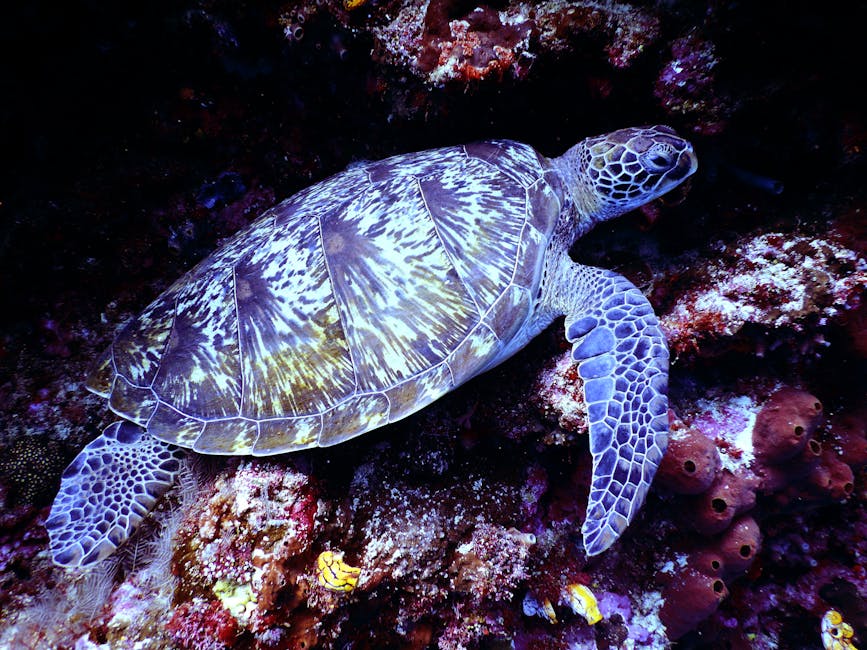
The wildlife in Florida is as vast and varied as its landscape. Spanning from the lush wetlands of the Everglades to the salty coastal regions, many diverse species thrive here, including an impressive variety of turtles. In this guide, we navigate the captivating world of turtles living in Florida, introducing you to the top ten species you’re most likely to encounter.
1. Loggerhead Sea Turtle
Skimming through the warm waters off Florida’s coastline, you stand a good chance of encountering a Loggerhead Sea Turtle, the state’s most prevalent turtle species. Known for their massive heads and heart-shaped carapace, these giants glide gracefully through their marine habitat, often venturing into estuaries and bays. They munch on a diet mainly consisting of jellyfish, crustaceans, and mollusks. The best places to catch sight of these captivating creatures are around the southeastern parts of Florida, especially Brevard County. Pro Tip: Loggerheads have a reddish-brown shell with slightly darker colored flippers. Maintain a respectable distance and avoid approaching their nesting sites.
2. Green Sea Turtle
Misleading with its name, the Green Sea Turtle has a brown or black carapace – it’s actually their fat, rich with green algae from their diet, that gives them their name. They’re a bit shyer than Loggerheads and are distinguished by their rounder heads and comparatively smaller size. When visiting the waters around the Florida Keys or seagrass habitats, handle your encounters with care, ensuring minimal disturbance.
3. Hawksbill Sea Turtle
Renowned for their beautiful and coveted shells, Hawksbill Sea Turtles are sadly endangered due to illegal wildlife trade. These distinguishable sea turtles are smaller in size compared to Loggerheads and have a bird-like beak made noticeable by a hook at its end. Their exquisite shells can be recognized by the overlapping scutes pattern. If you happen to spot a Hawksbill, keep in mind the vital need for their protection and report any harmful human interactions that could escalate their endangered status.
4. Leatherback Sea Turtle
You might need to count yourself lucky to encounter a Leatherback Sea Turtle in Florida, the largest of all living turtles worldwide. Unlike their relatives, Leatherbacks lack a hard carapace and present a leathery, oil-slicked skin. When in Palm Beach County during the turtle nesting season, you might get a rare glimpse of one. Pro Tip: they usually nest at night, so nighttime beach excursions may increase your chances. But remember, disturbing a nesting turtle is illegal and harmful, so keep your distance.
5. Florida Softshell Turtle
Unlike their sea brethren, Florida Softshell Turtles opt for freshwater habitats like streams, swamps and ponds. With their round, flat, pancake-like body, long neck, and snorkel-like nose, they’re unique among turtles and great swimmers. Polk County is a great place to see a Softshell in its natural habitat. When around them, respect their space, don’t feed them and resist the temptation to make them pets.
6. Gopher Tortoise
As the state tortoise of Florida, you’d probably cross paths with a Gopher Tortoise at least a couple of times, especially if you often navigate sandy and upland habitats. These keystone species are crucial to Florida’s ecosystem because their burrows provide homes for over 350 other animal species. Central and North Florida, as well as the Lake Wales Ridge area, are great places to spot these interesting creatures. Pro Tip: If you wish to contribute to their conservation efforts, consider joining or donating to organizations that promote the protection and preservation of Gopher Tortoises.
7. Eastern Box Turtle
In contrast to the Gopher Tortoise, the Eastern Box Turtle boasts a brightly colored dome-shaped shell with distinct yellow or orange patterns. They live in various habitats such as forests, fields, and marshy areas. These captivating creatures are trouble-free to identify but are sadly declining due to habitat loss and road mortality. Efforts are being made to conserve these turtles and ensure their future in Florida.
8. Barbour’s Map Turtle
These intriguing turtles get their name from the intricate map-like lines gracing their carapace. Barbour’s Map Turtles dwell exclusively in the river systems in Panhandle Florida. Unfortunately, their population is declining due to habitat degradation from human activities. Pro Tip: Enjoying a river adventure? Remember to leave no trace behind to help protect these amazing turtles and their habitats.
9. Diamondback Terrapin
Diamondback Terrapins, named for their unique diamond-shaped shell patterns, inhabit the brackish coastal wetlands along Florida’s coast. Although not yet endangered, their populations are declining. These turtles are quite elusive – hence spotting them can be quite a thrill! When near them, maintain a respectful distance and avoid disturbing their habitat.
10. Red-Eared Slider
Introduced pet turtles hailing mainly from the pet trade, the Red-Eared Sliders have unfortunately become an invasive species in Florida. The turtles’ red ‘ear’ draws a stark contrast with native turtles and makes them easy to distinguish. If you’re a pet owner, ensure that your liquid-loving pet doesn’t become a threat to Florida’s ecosystems by never releasing them into the wild.
That concludes our Chipper Birds Guide to the top 10 turtle species in Florida. By appreciating and respecting these fascinating creatures, we can help ensure their survival and maintain Florida’s diverse ecosystems.
Key Takeaway:
- Florida is home to a variety of turtle species, each with distinctive characteristics and habitat preferences.
- Common species include the Loggerhead Sea Turtle, Green Sea Turtle, Hawksbill Sea Turtle, Leatherback Sea Turtle, and Florida Softshell Turtle.
- Other species such as Gopher Tortoise, Eastern Box Turtle, Barbour’s Map Turtle, Diamondback Terrapin, and Red-Eared Slider are also found in specific regions of Florida.
- Protecting and preserving these turtles’ habitats are crucial for their survival, maintaining the harmony of Florida’s ecosystems, and contributing to biodiversity.
It’s exciting to navigate the fascinating world of turtles in Florida and understand their uniqueness and conservation status. Let’s work collectively to protect these beautiful creatures and their habitats while on our nature explorations. Remember, keeping a respectful distance and never disturbing turtles helps keep their ecosystems balanced while you enjoy their captivating presence.
FAQs
Q: Are all turtles in Florida protected by law?
A: Yes, many turtle species in Florida are protected under state and federal laws. However, the specific laws and protection levels may vary depending on each species’ conservation status.
Q: What should I do if I find an injured turtle?
A: If you come across an injured turtle, contact a local wildlife rescue center or a turtle conservation agency. They have the expertise to provide the appropriate care and treatment.
Q: What are some of the threats faced by turtles in Florida?
A: Turtles in Florida face threats like habitat loss, road mortality, illegal wildlife trade, and encroachment from invasive species such as the Red-Eared Slider.
Q: What is the significance of Gopher Tortoise burrows?
A: Gopher Tortoise burrows play a crucial role in Florida’s ecosystem as they provide shelter and home for over 350 other animal species, which is why this species is often referred to as a keystone species.
Q: How big do Leatherback Sea Turtles grow?
A: Leatherback Sea Turtles are the largest living turtles, and they can grow up to 7 feet in length and can weigh up to 2000 pounds.
To learn more about Florida’s unique wildlife and its conservation, feel free to explore other articles on our website. Don’t forget to share this guide with your friends and fellow nature enthusiasts.